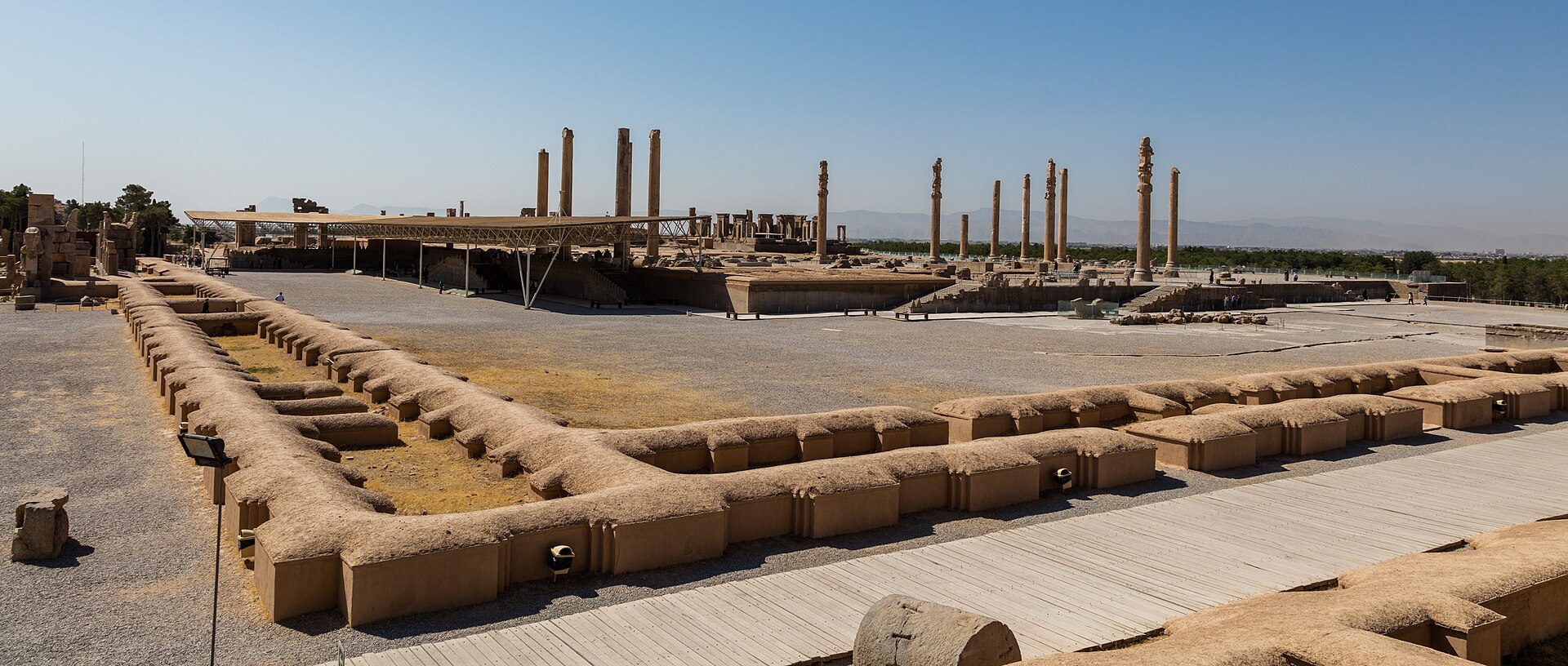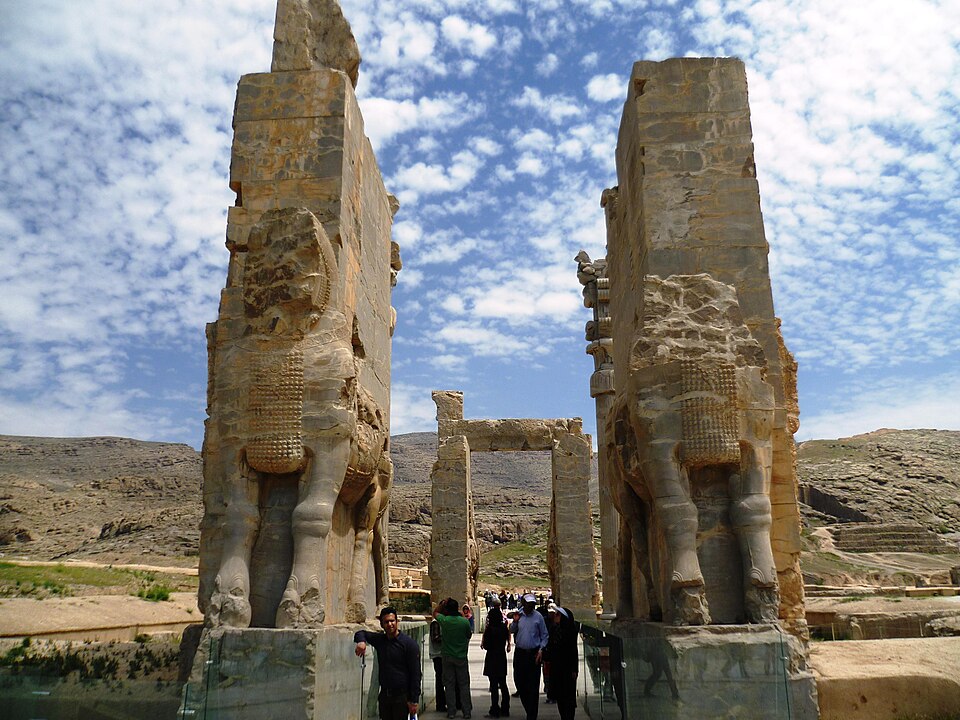
Begun by Darius the Great and completed by his son Xerxes, the Apadana was the largest hall of Persepolis — a square audience hall whose roof rested on 72 stone columns nearly 20 metres high, crowned with capitals of bulls, lions and griffins. Here the King of Kings received envoys from across an empire that stretched from Egypt to India. A few of the columns still stand against the sky.
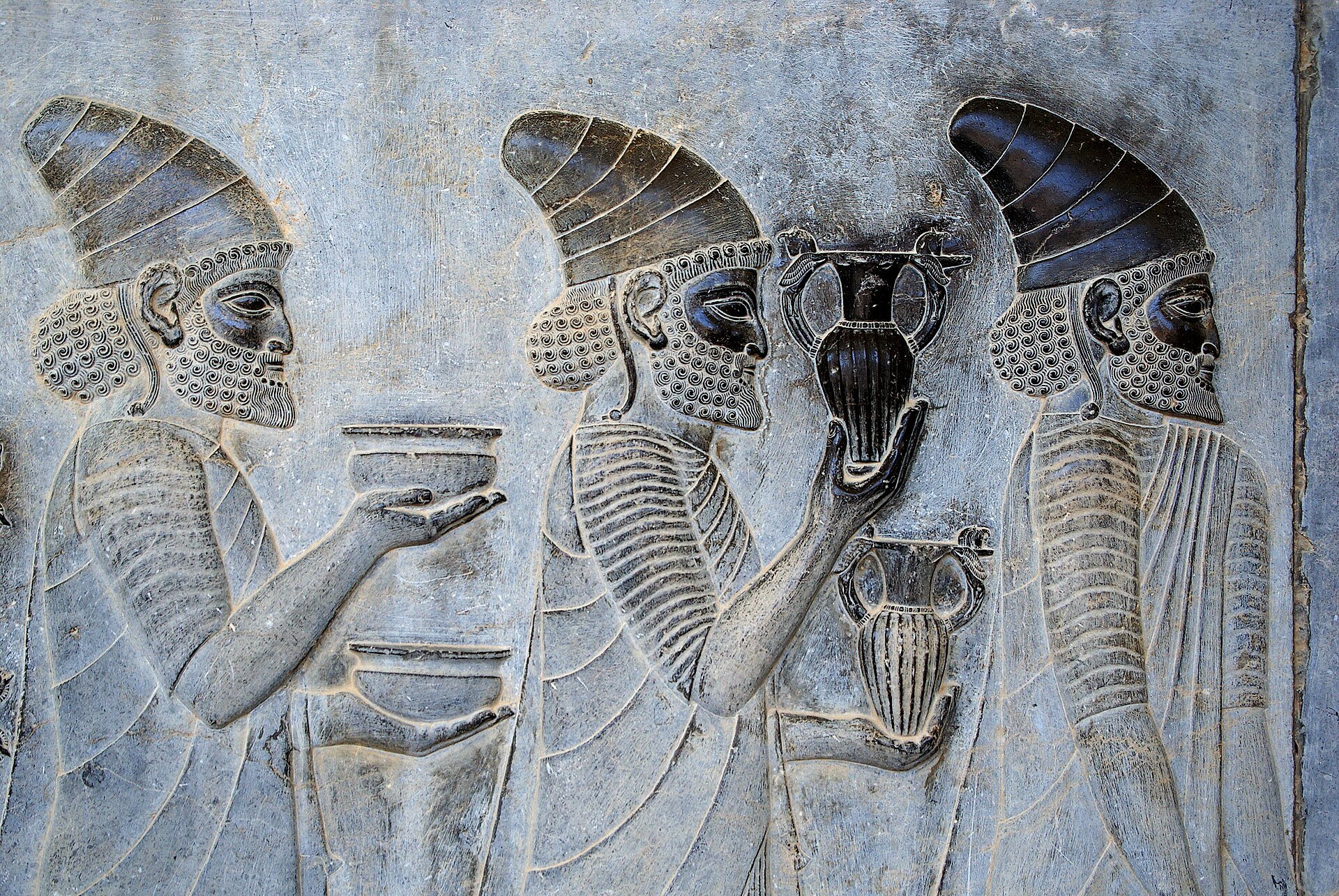
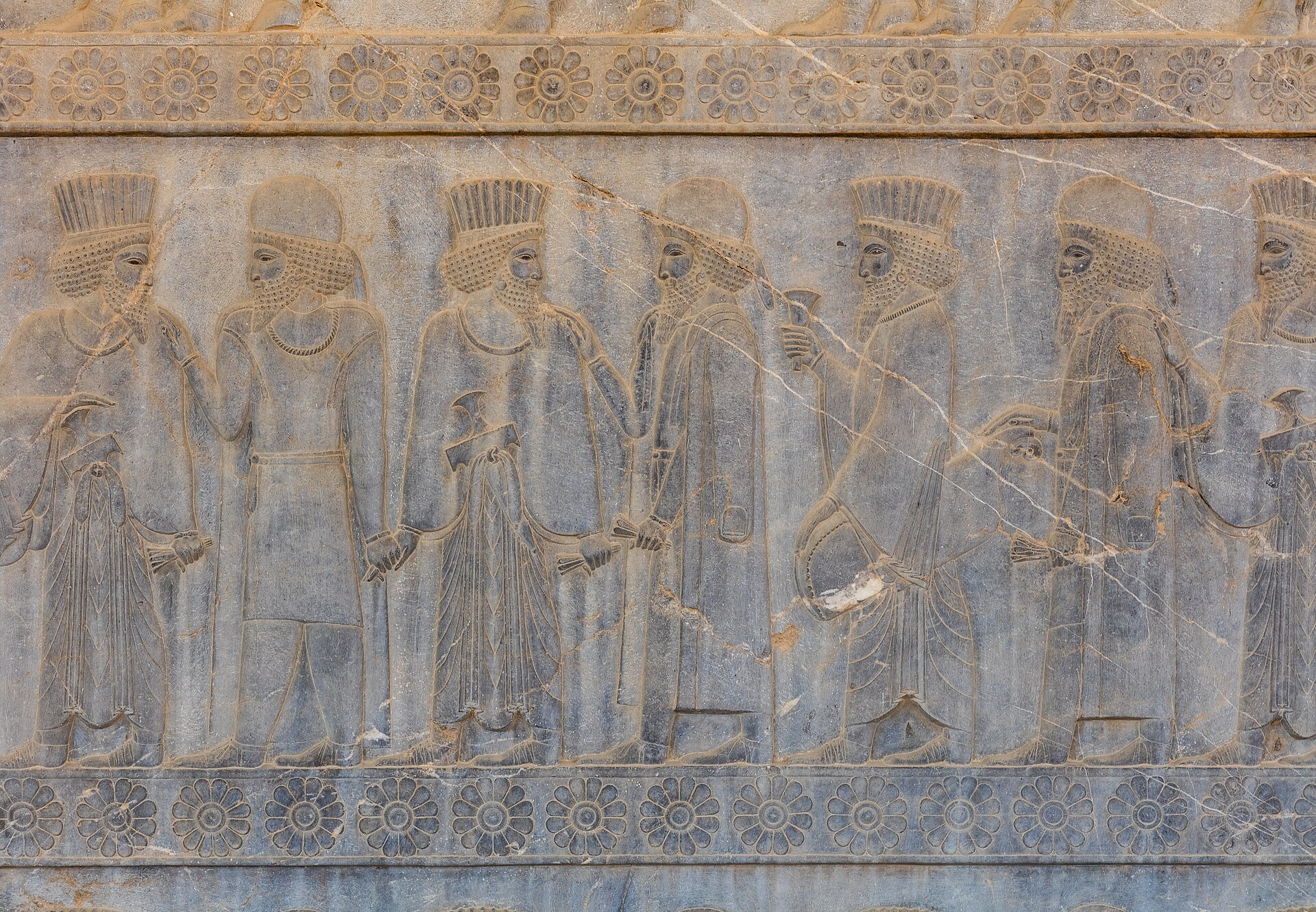
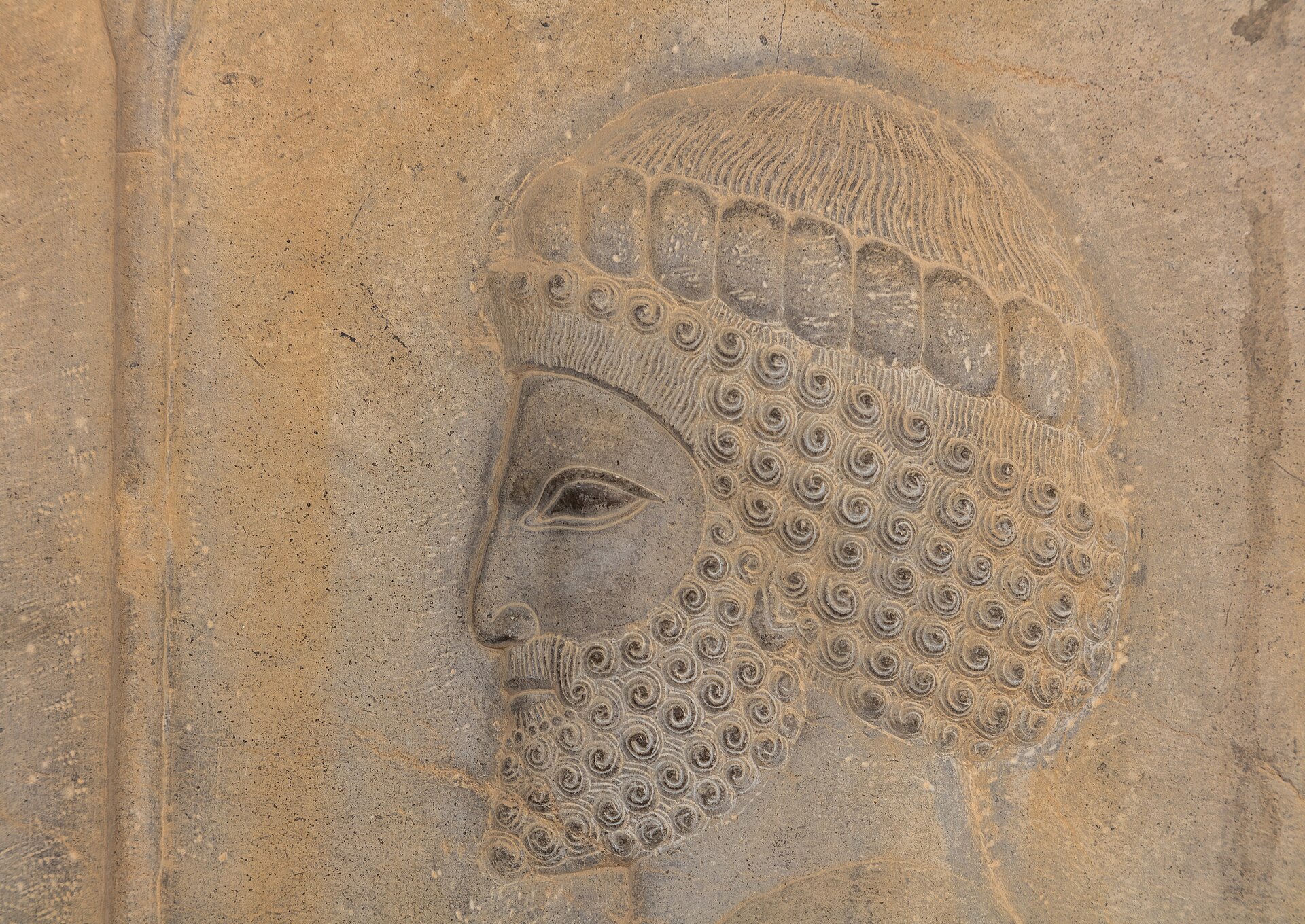
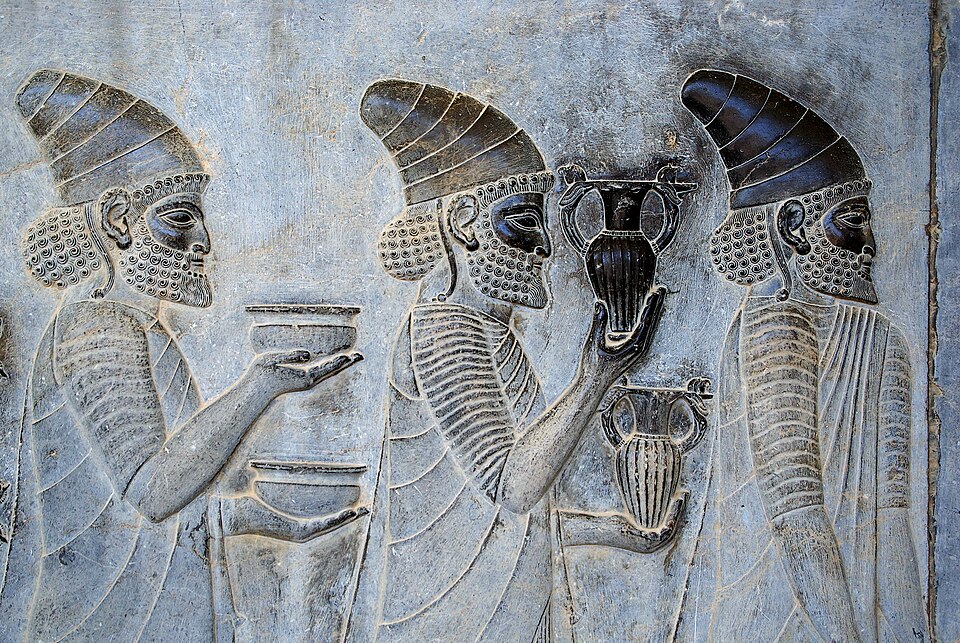
The eastern staircase is the masterpiece. Its reliefs show 23 delegations — Medes, Elamites, Armenians, Babylonians, Ethiopians, Indians and more — each in their own dress, bringing gifts: horses, camels, gold, textiles. Facing them are rows of royal guards and the recurring image of a lion attacking a bull. Buried under debris for centuries, the carvings are remarkably crisp.
Highlights
- Reliefs of the 23 tribute-bearing delegations
- The lion-and-bull motif
- Standing columns of the audience hall
- Rows of royal guards on the staircase
Gallery