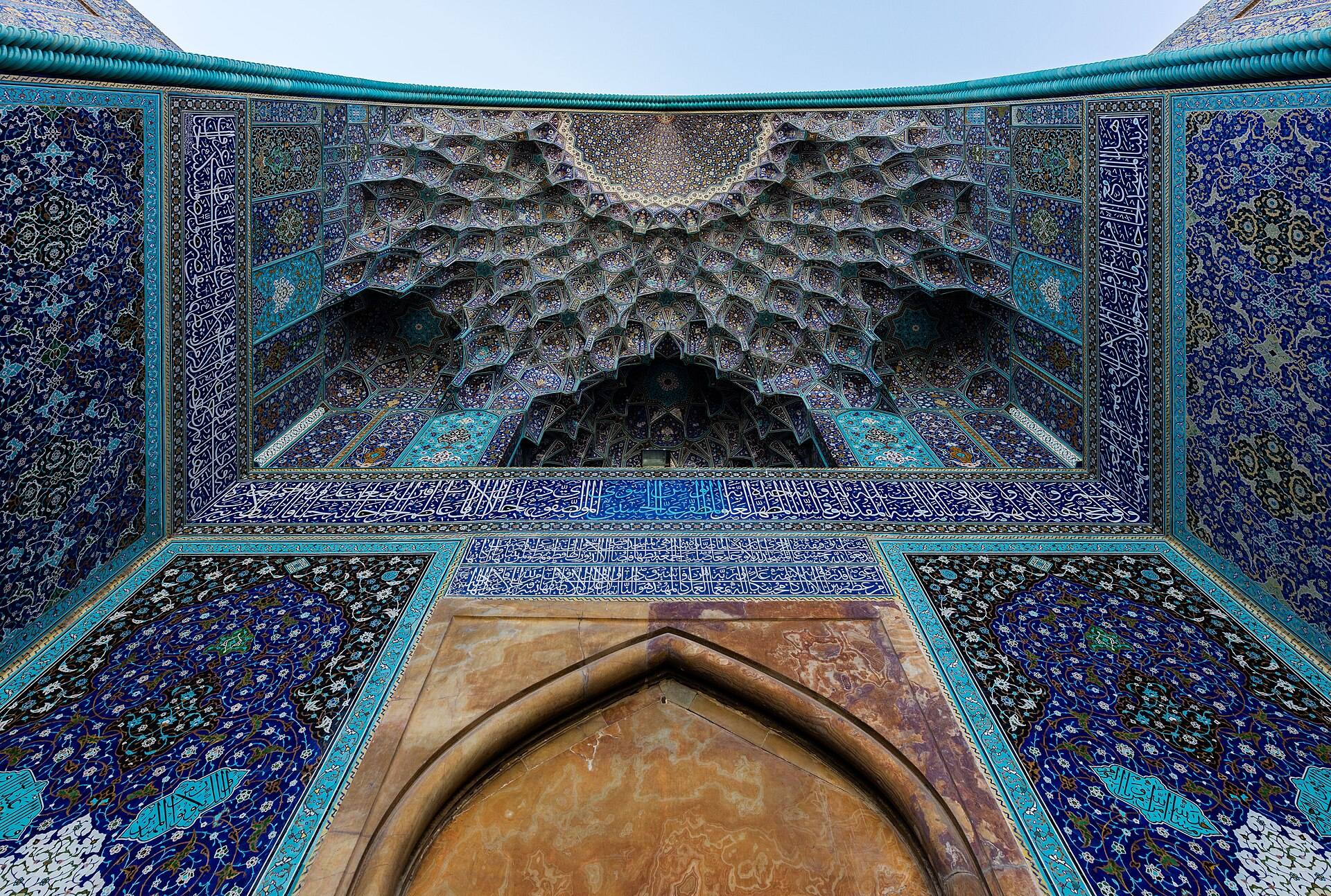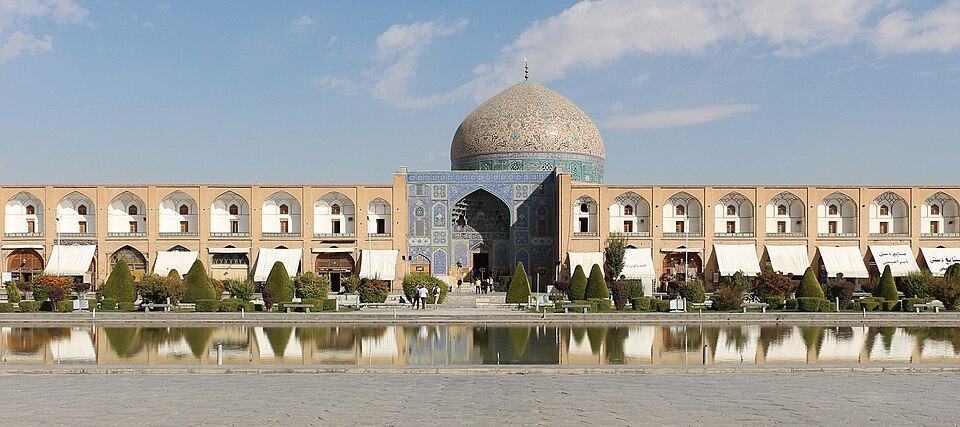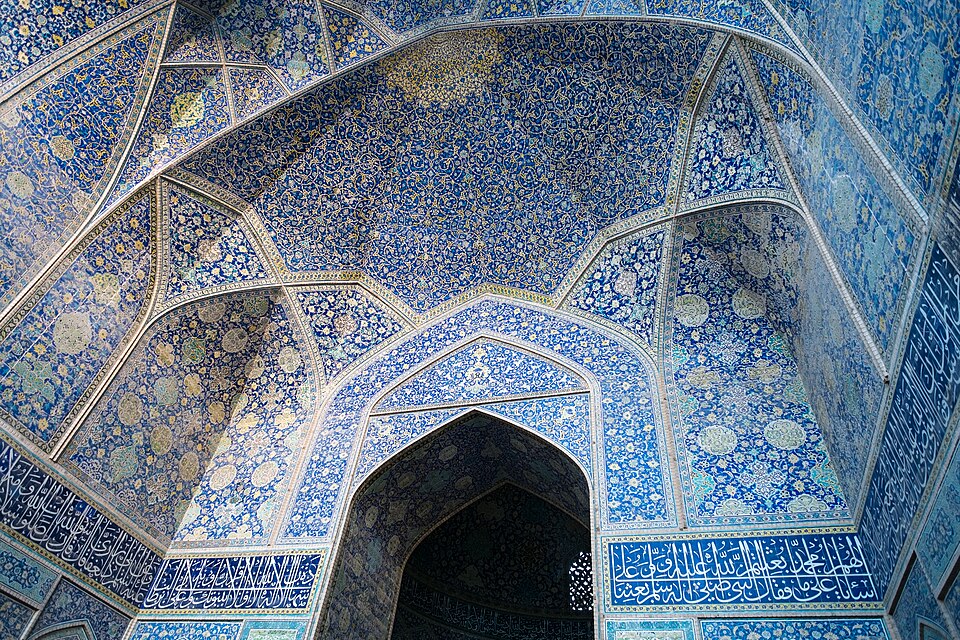
Commissioned by Shah Abbas I in 1611 as the crowning piece of his new square, the Shah Mosque — renamed the Imam Mosque after 1979 — is a masterpiece of Safavid architecture. Its lofty entrance portal faces the square, but the mosque behind it turns at an angle so that the prayer hall points towards Mecca. Walking through the vestibule you feel the shift without seeing it.
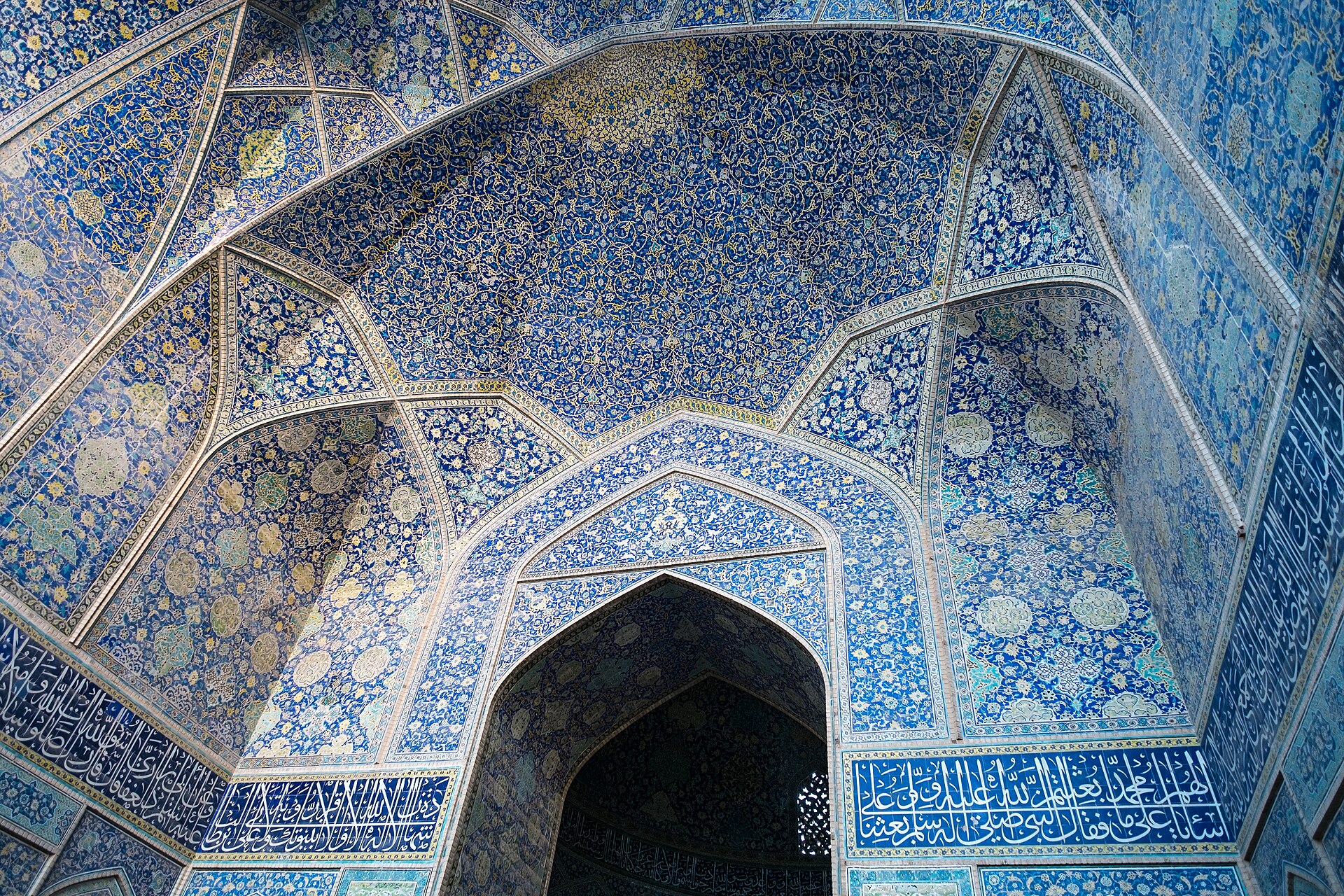
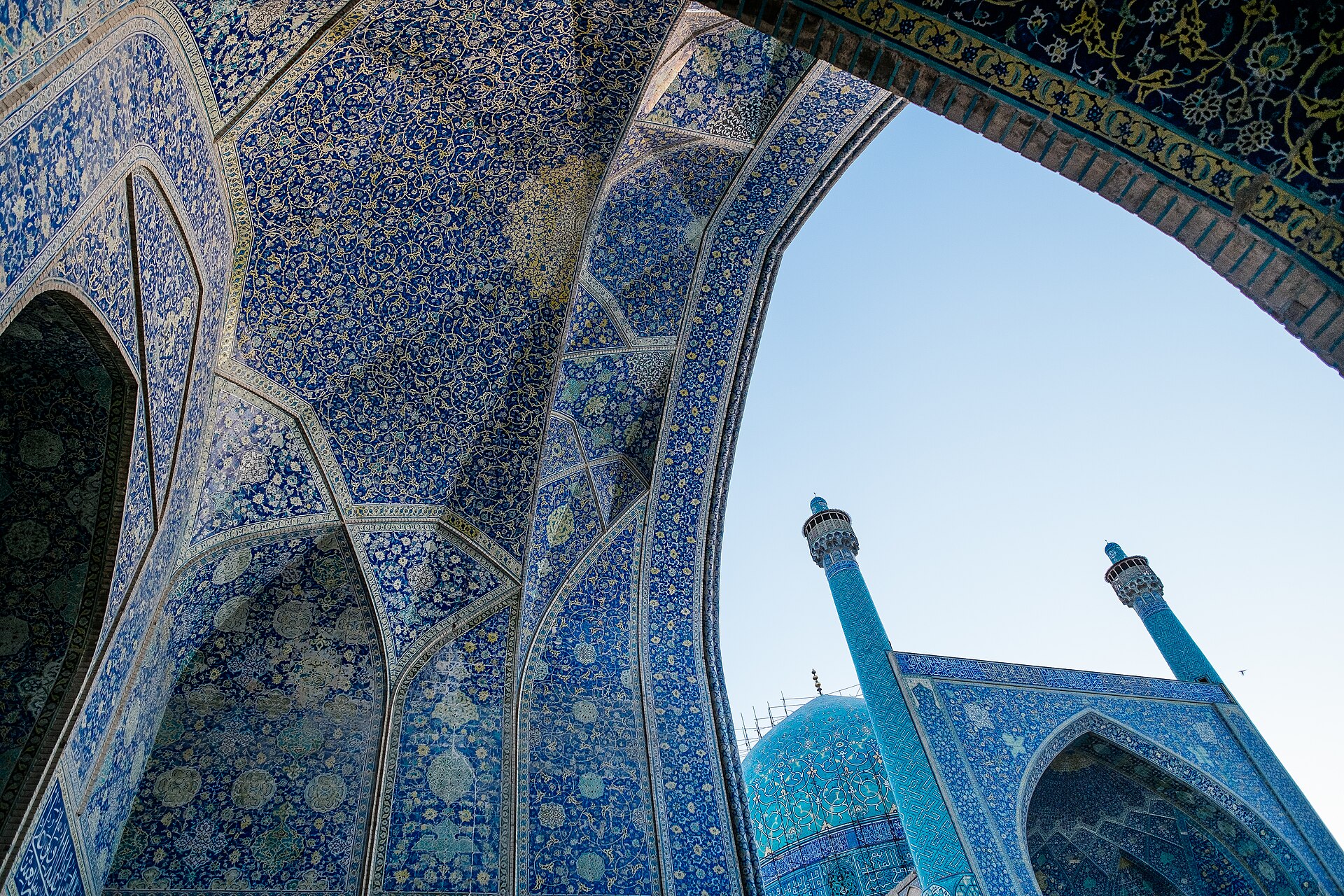
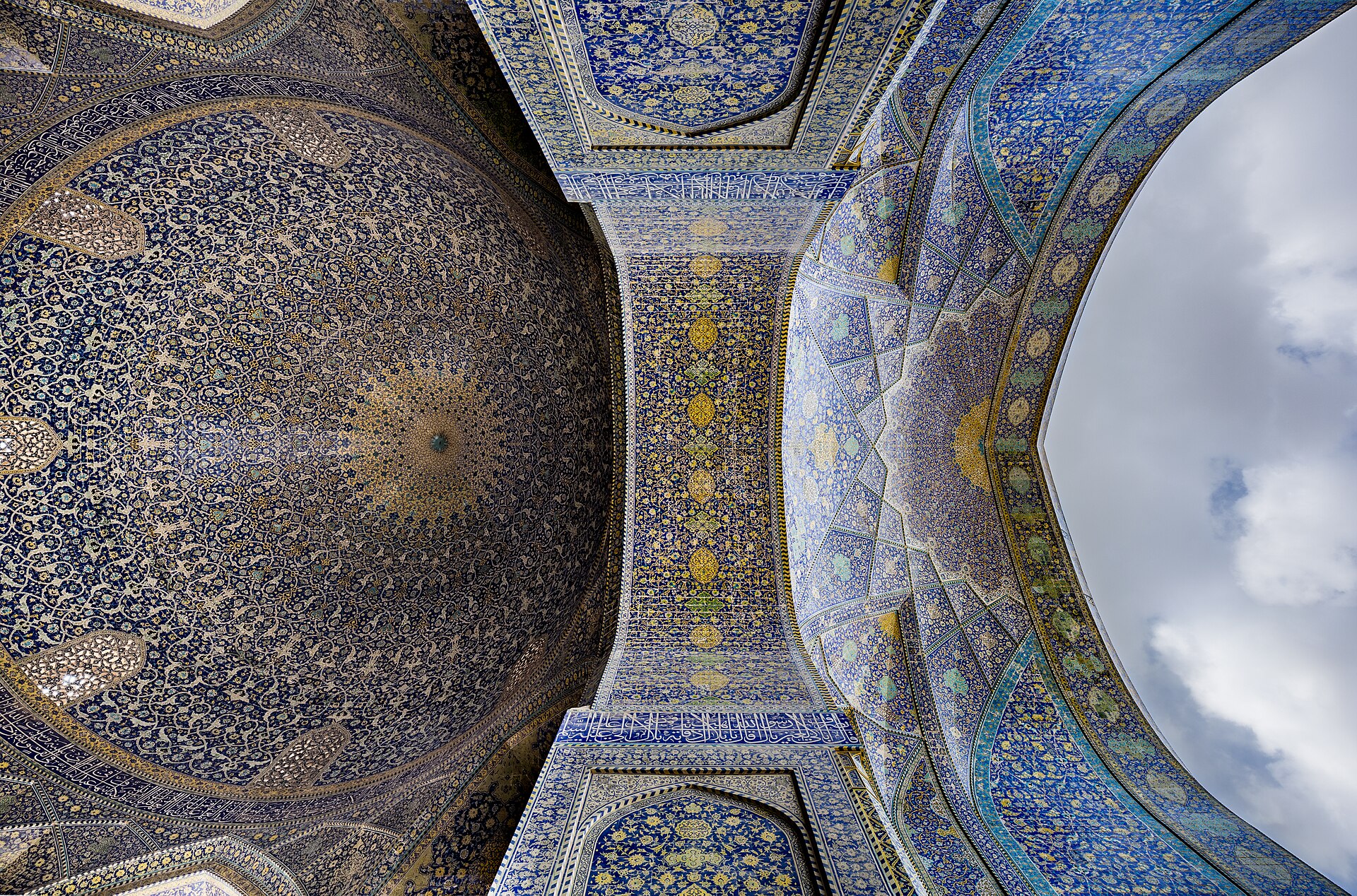
Almost every surface is covered in the blue-dominated “seven-colour” (haft-rangi) tiles that made Isfahan famous. Two minarets flank the portal, two more frame the sanctuary iwan, and the great double dome rises above a prayer hall where light falls in through high grilles. The two madrasas beside the sanctuary, with their gardens, are quiet corners many visitors miss.
Stand on the black stone beneath the centre of the main dome and clap or speak softly: the sound comes back to you many times. Guides love to demonstrate it — sometimes, as in the video on this page, with a few lines of the call to prayer.
Video
Highlights
- The echo beneath the main dome
- Seven-colour tilework of the entrance portal
- The angled vestibule that turns you towards Mecca
- Quiet madrasa courtyards beside the sanctuary
Gallery