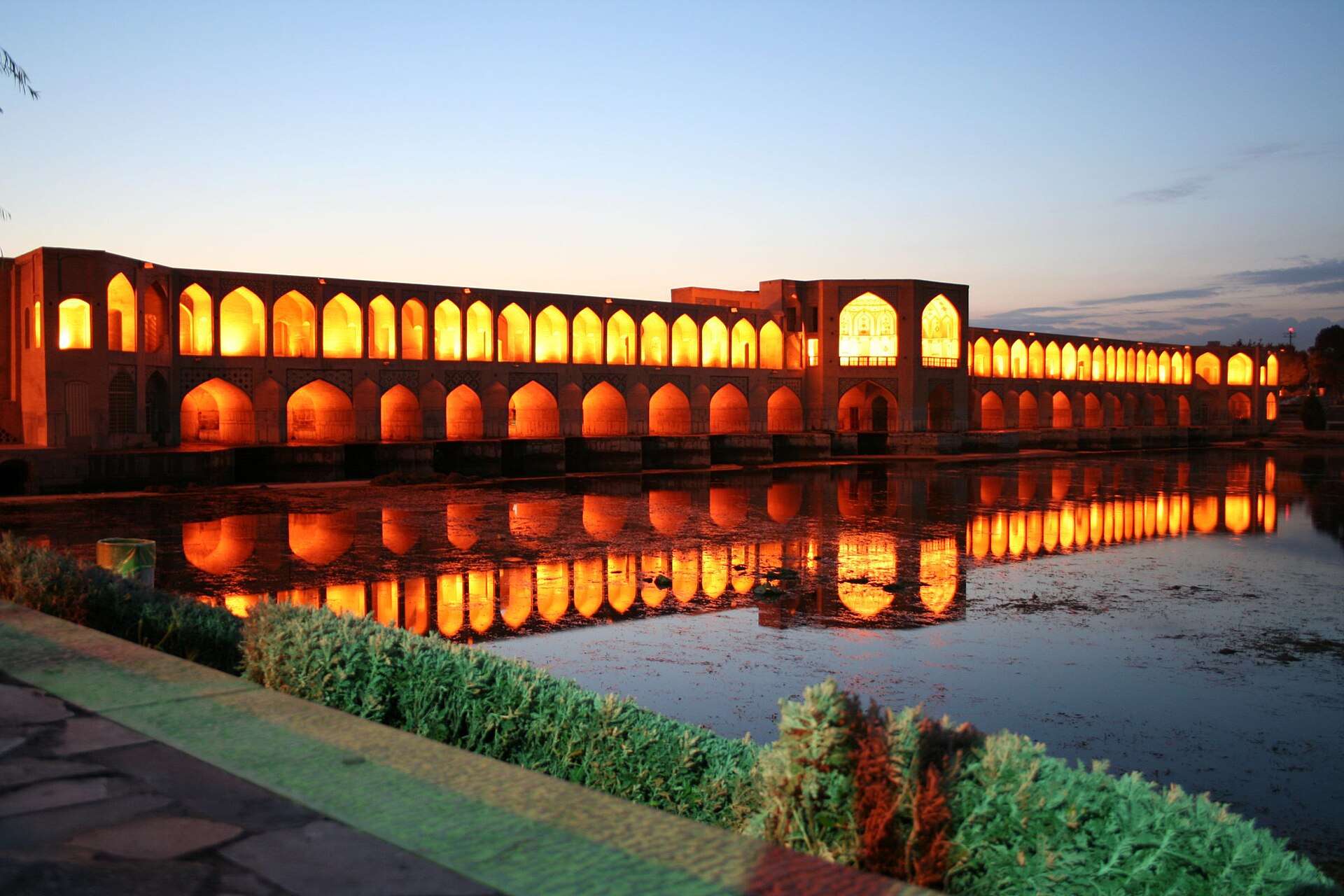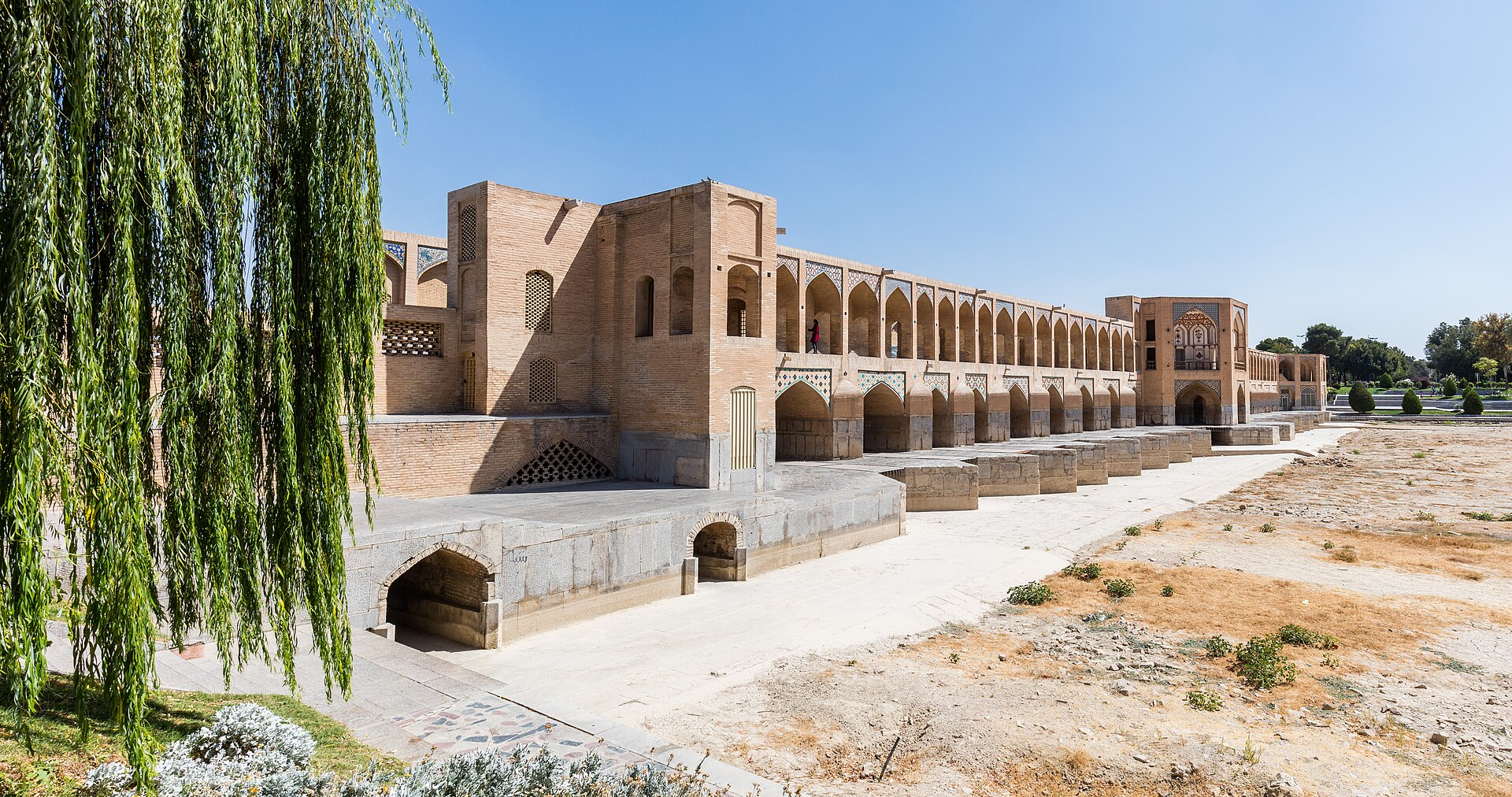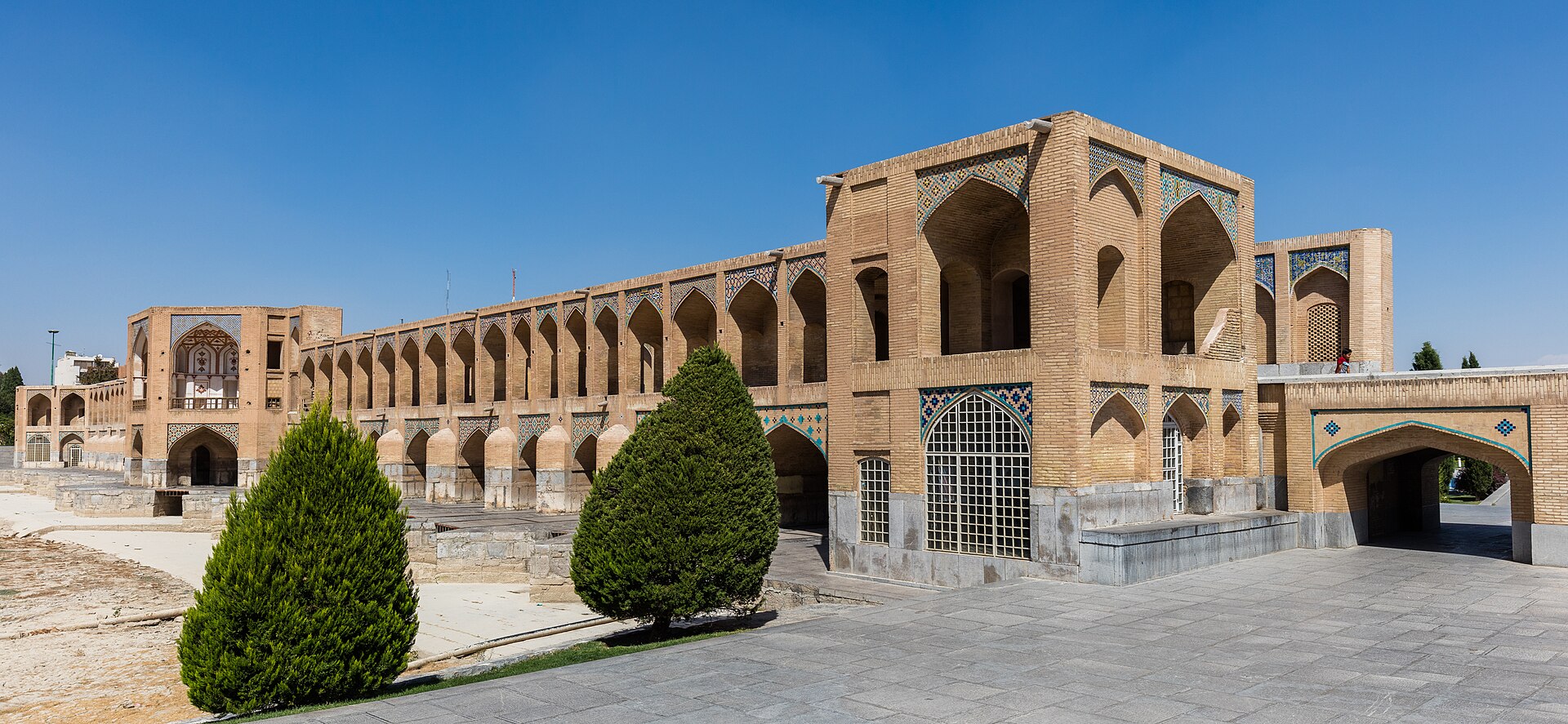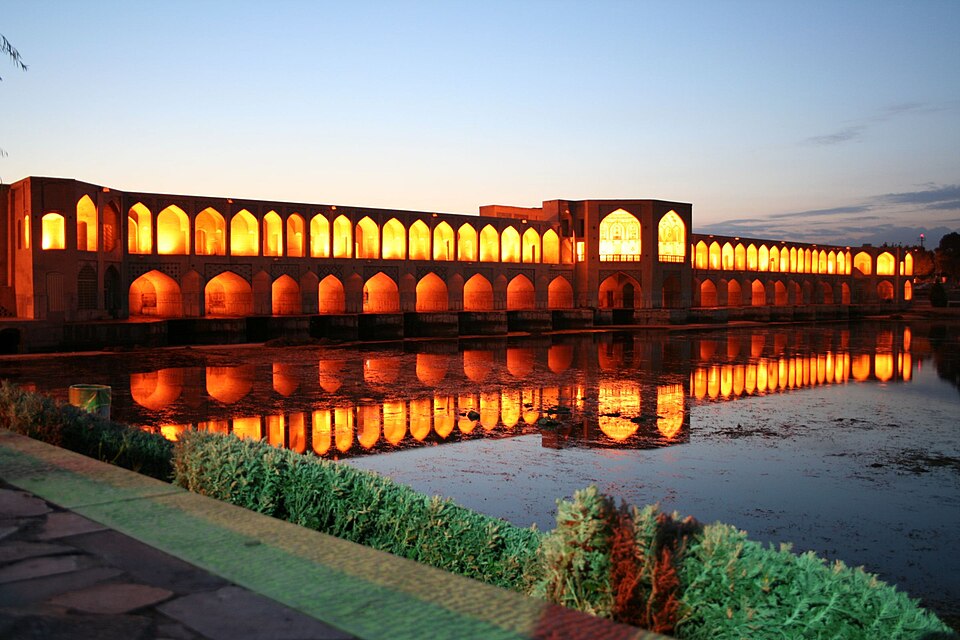
Built around 1650 by Shah Abbas II on the foundations of an older bridge, Khaju is shorter than Si-o-se-pol but far more elaborate. It is a bridge and a weir at the same time: sluice gates in its lower level once controlled the river, creating a lake upstream for the royal court’s boating parties and irrigating the gardens downstream.
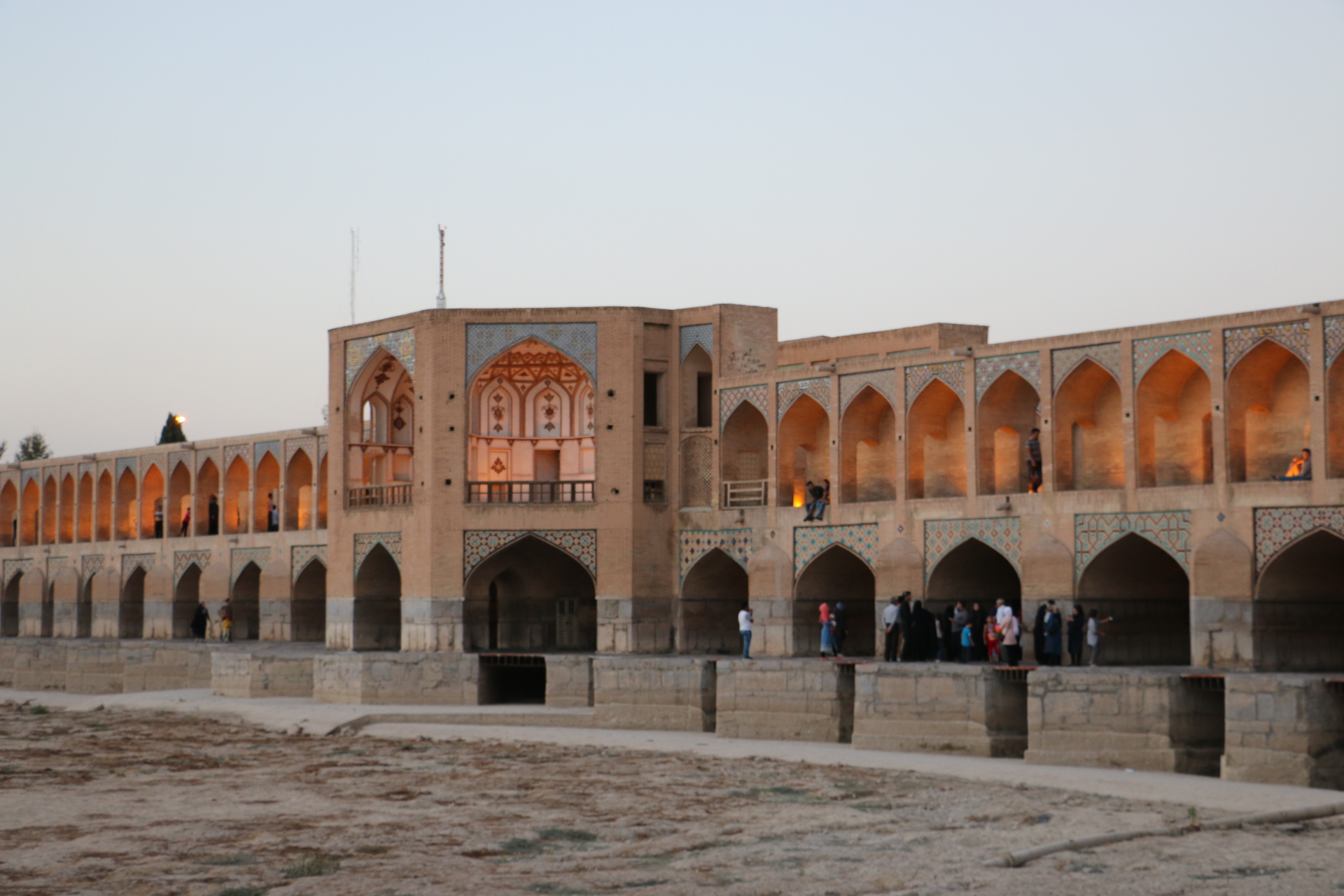
At its centre stands a two-storey pavilion, the Shah-neshin, where the shah sat to enjoy the view; traces of painted and tiled decoration still survive in its alcoves. Stone lions guard each end of the bridge, and the stepped stone platforms of the lower level are perfect for sitting by the water.
Khaju’s real magic comes at night. The arches of the lower gallery have wonderful acoustics, and it is a long-standing Isfahani tradition for men to gather there and sing — classical Persian songs, folk tunes and the verses of Hafez — while passers-by stop to listen, as you can see in the video on this page.
Video
Highlights
- Night-time singing under the arches
- The Shah-neshin pavilion at the centre
- Stone lions at both ends
- Stepped platforms to sit by the water
Gallery