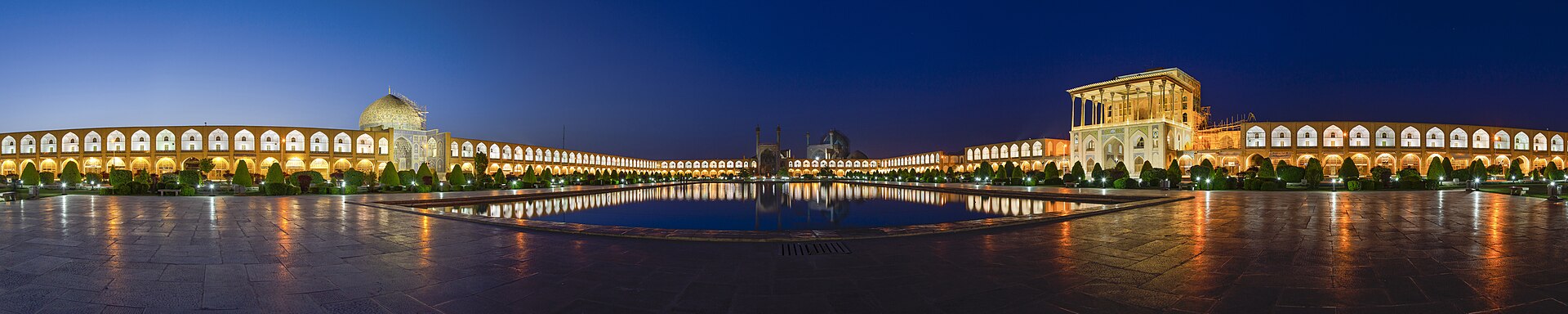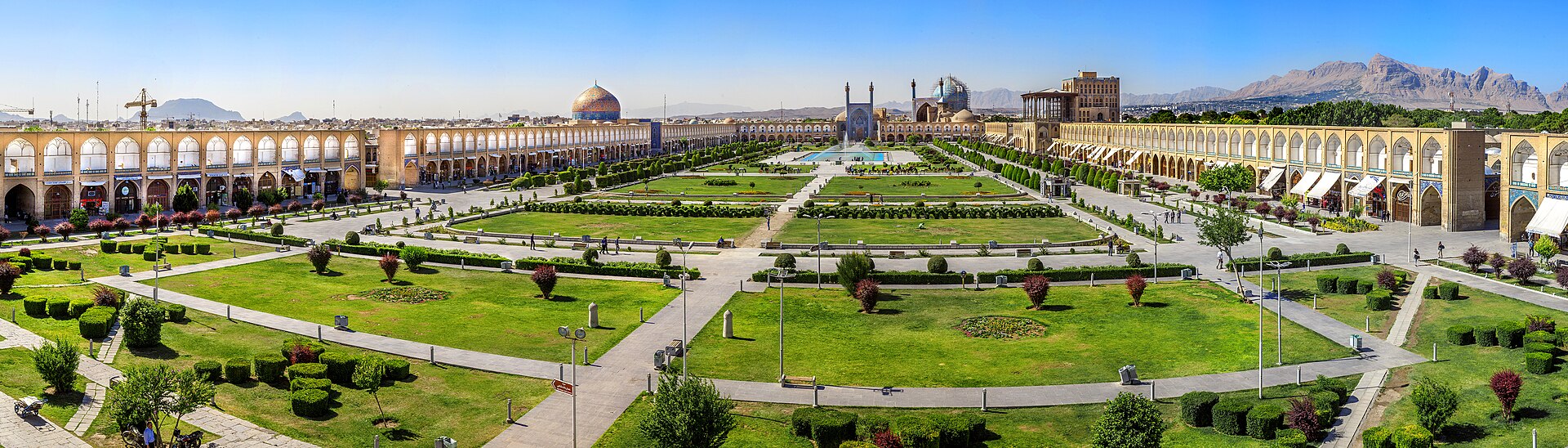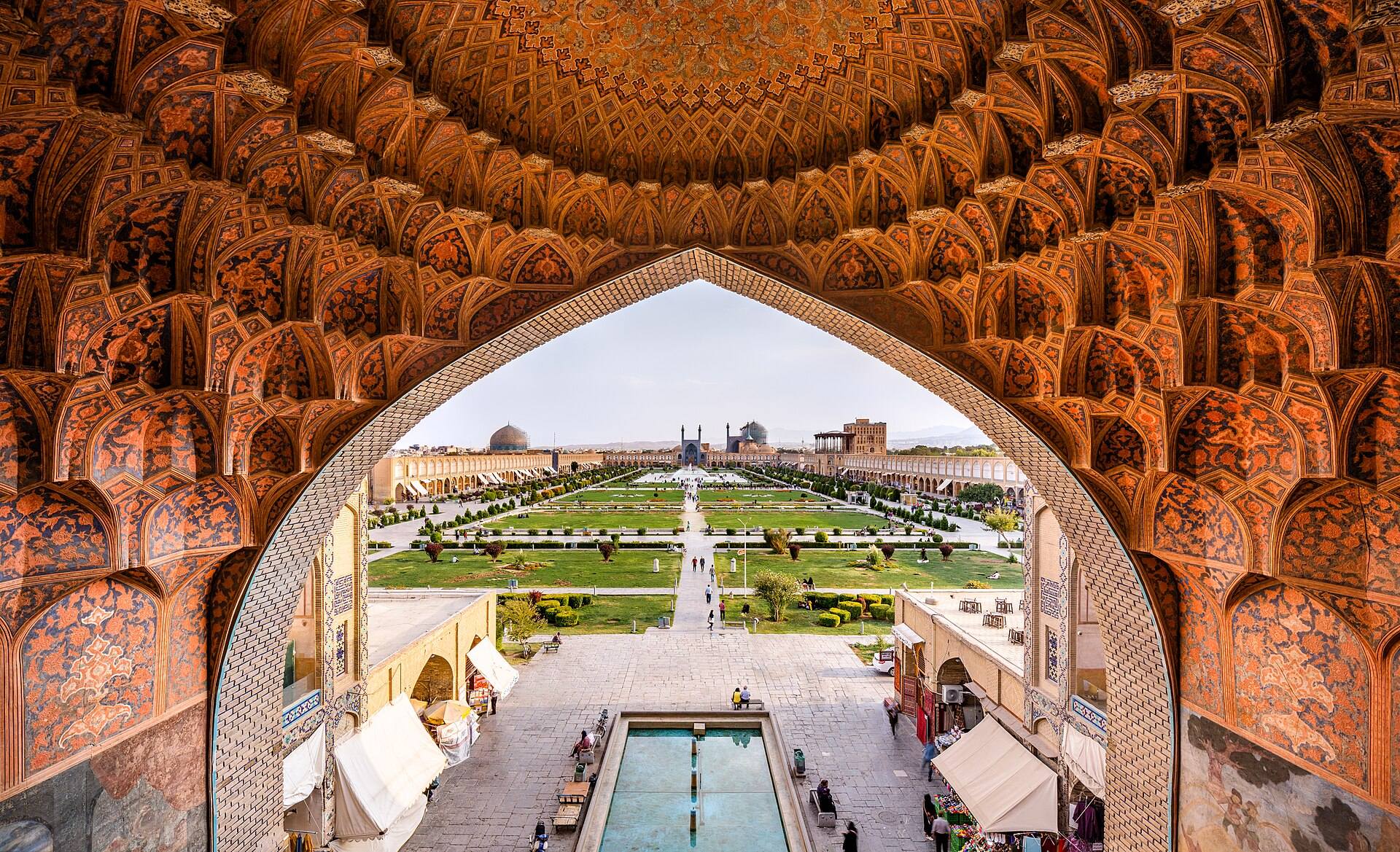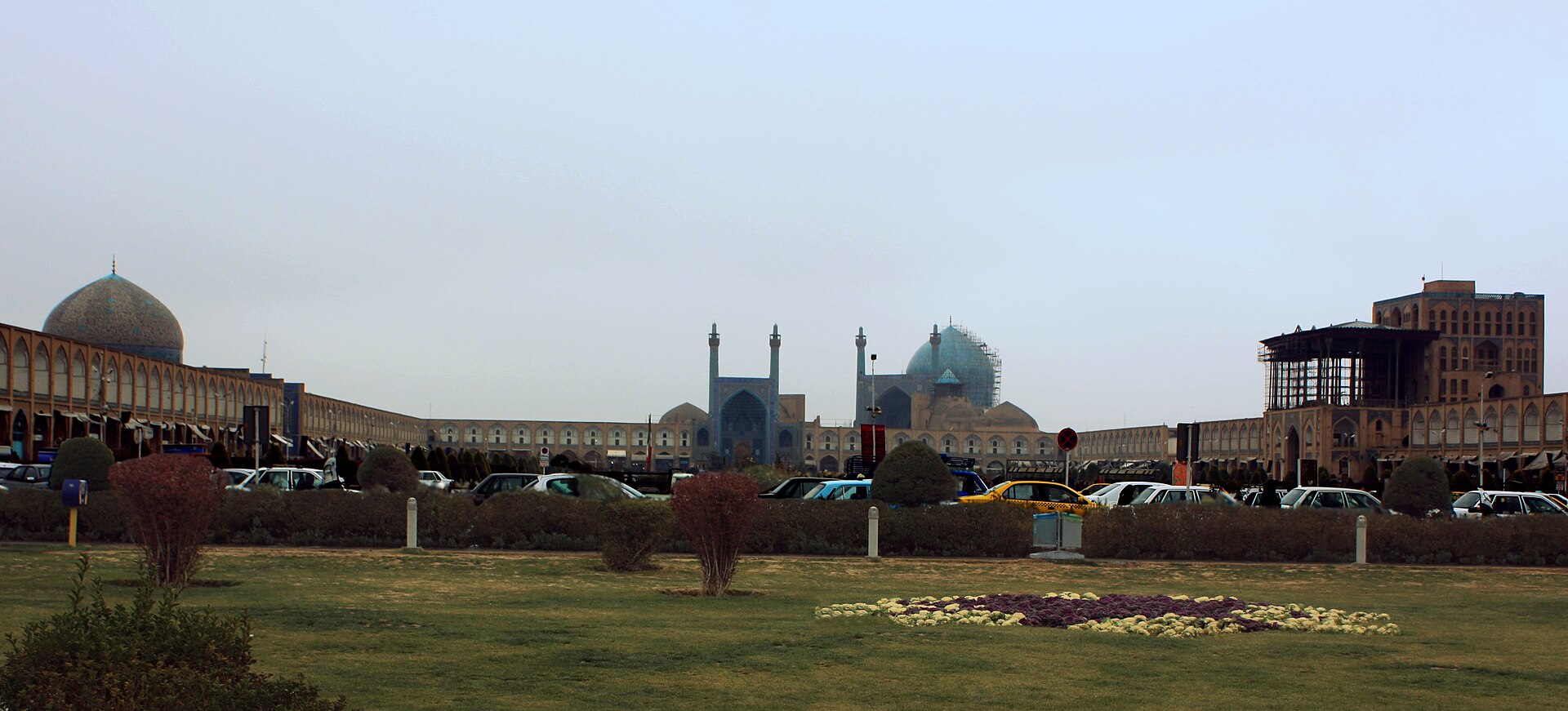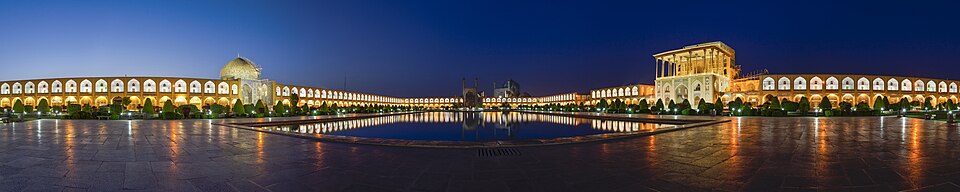
When Shah Abbas I made Isfahan his capital in 1598, he laid out a square to show the world what Safavid Persia could do. More than 500 metres long and lined with two storeys of arcades, Naqsh-e Jahan — “Image of the World” — is still one of the largest city squares on Earth and has been a UNESCO World Heritage Site since 1979.
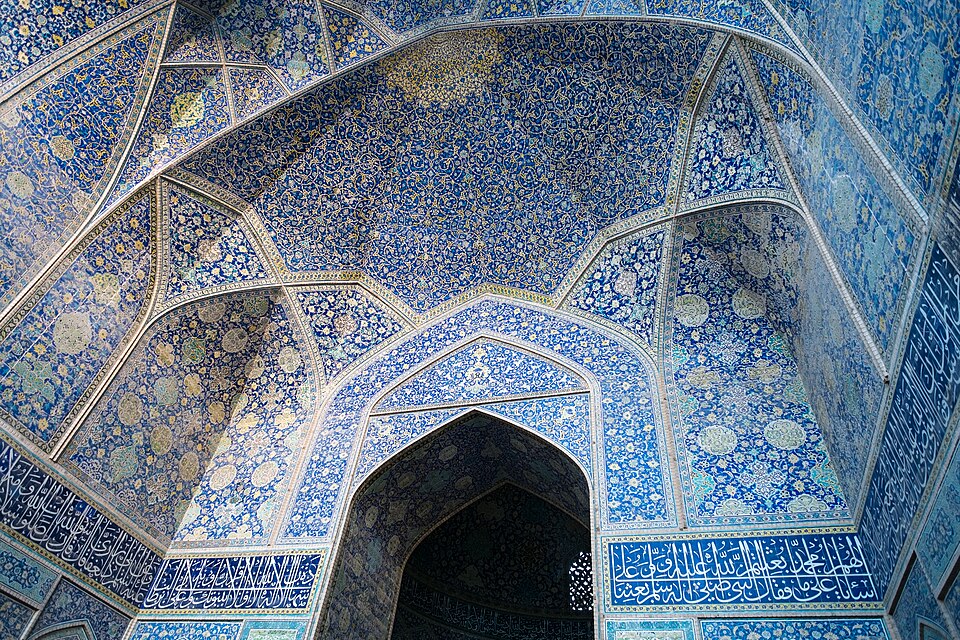
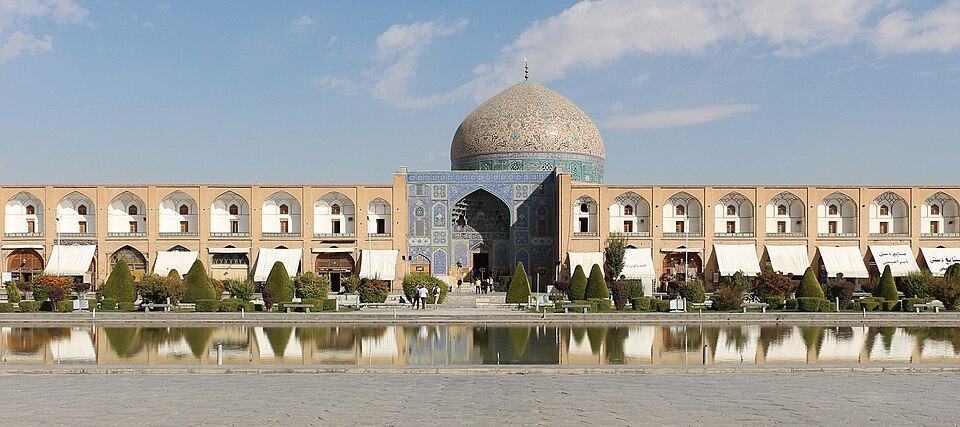
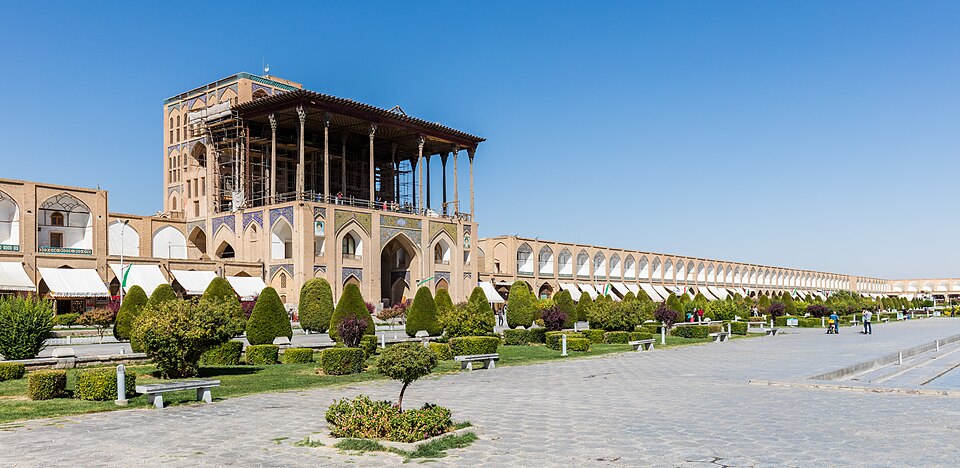
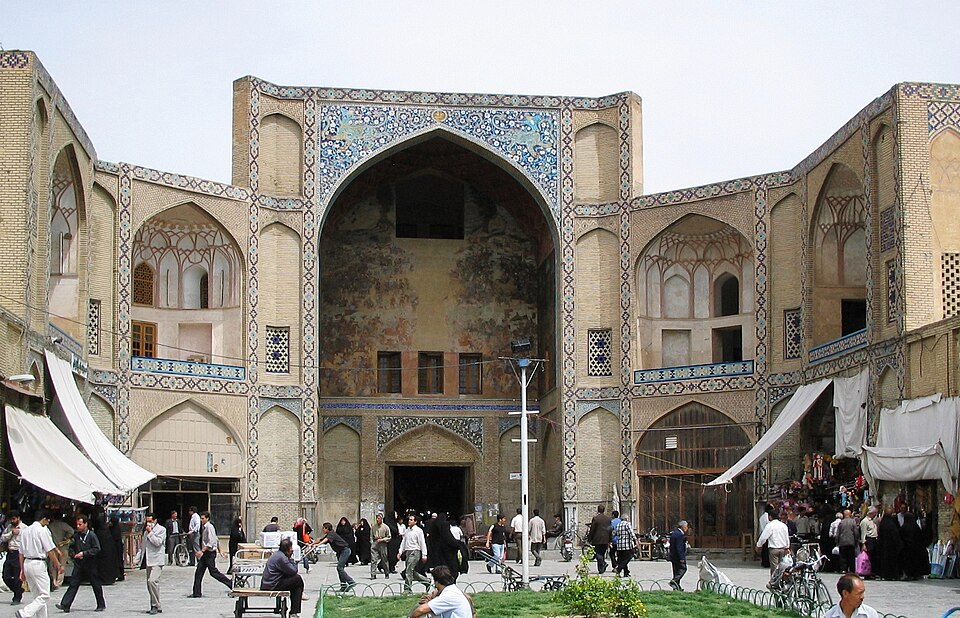
Four great buildings face each other across the lawns and fountains: the Shah Mosque to the south, the Sheikh Lotfollah Mosque to the east, the Ali Qapu Palace to the west and the tiled Qeysarieh gate of the Grand Bazaar to the north. Power, faith and trade were placed in one frame. The stone goalposts at either end recall the days when the court watched polo matches here.
Today the square belongs to the people of Isfahan. Horse-drawn carriages circle the pool, craftsmen hammer copper in the arcades, and after sunset families spread carpets on the grass for tea and picnics. Come twice: once by day for the monuments, once at night for the atmosphere.
Highlights
- Panorama from the Ali Qapu terrace
- Horse-carriage ride around the central pool
- Copper, enamel and miniature workshops in the arcades
- Evening picnics with local families
Gallery