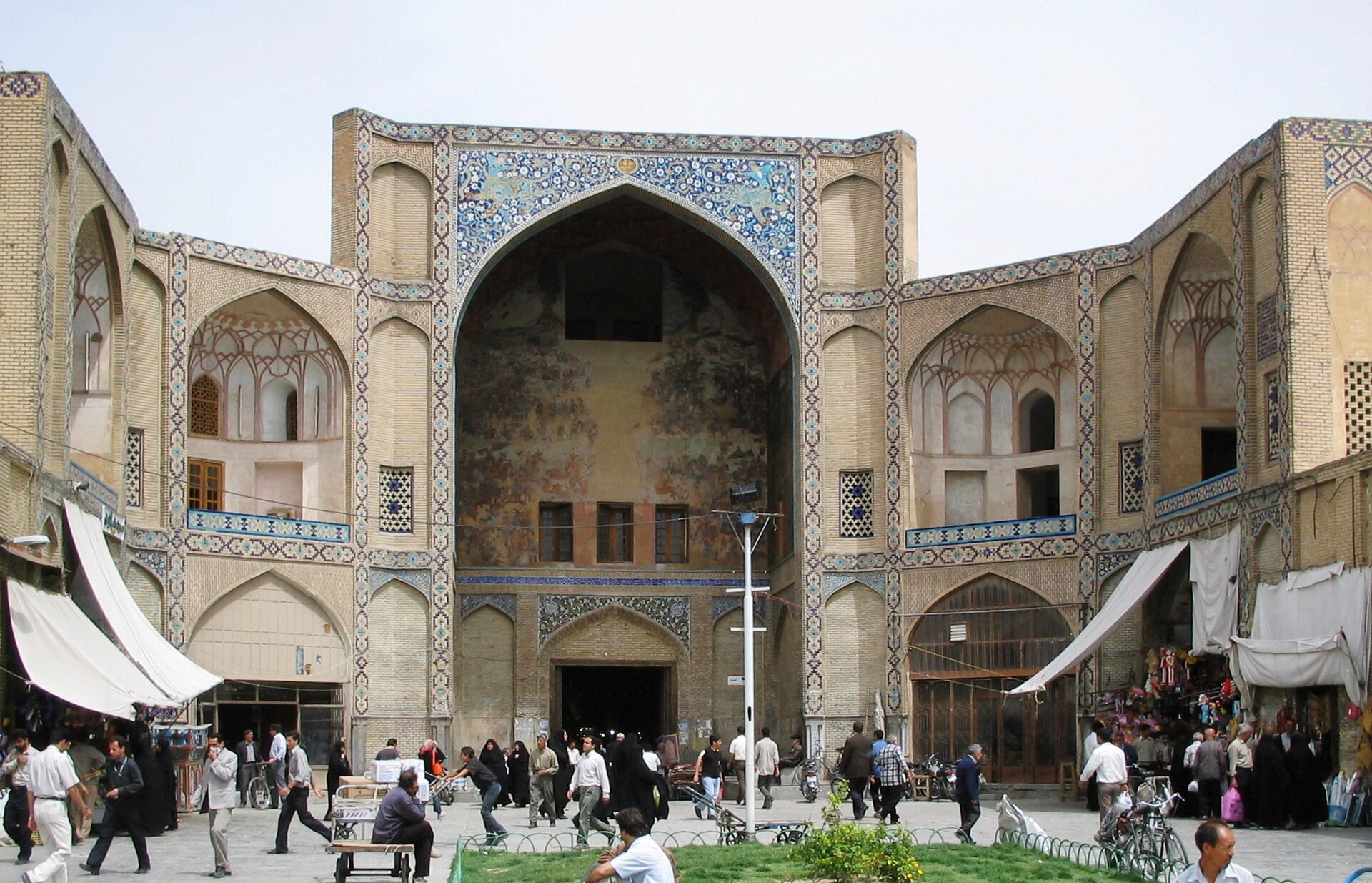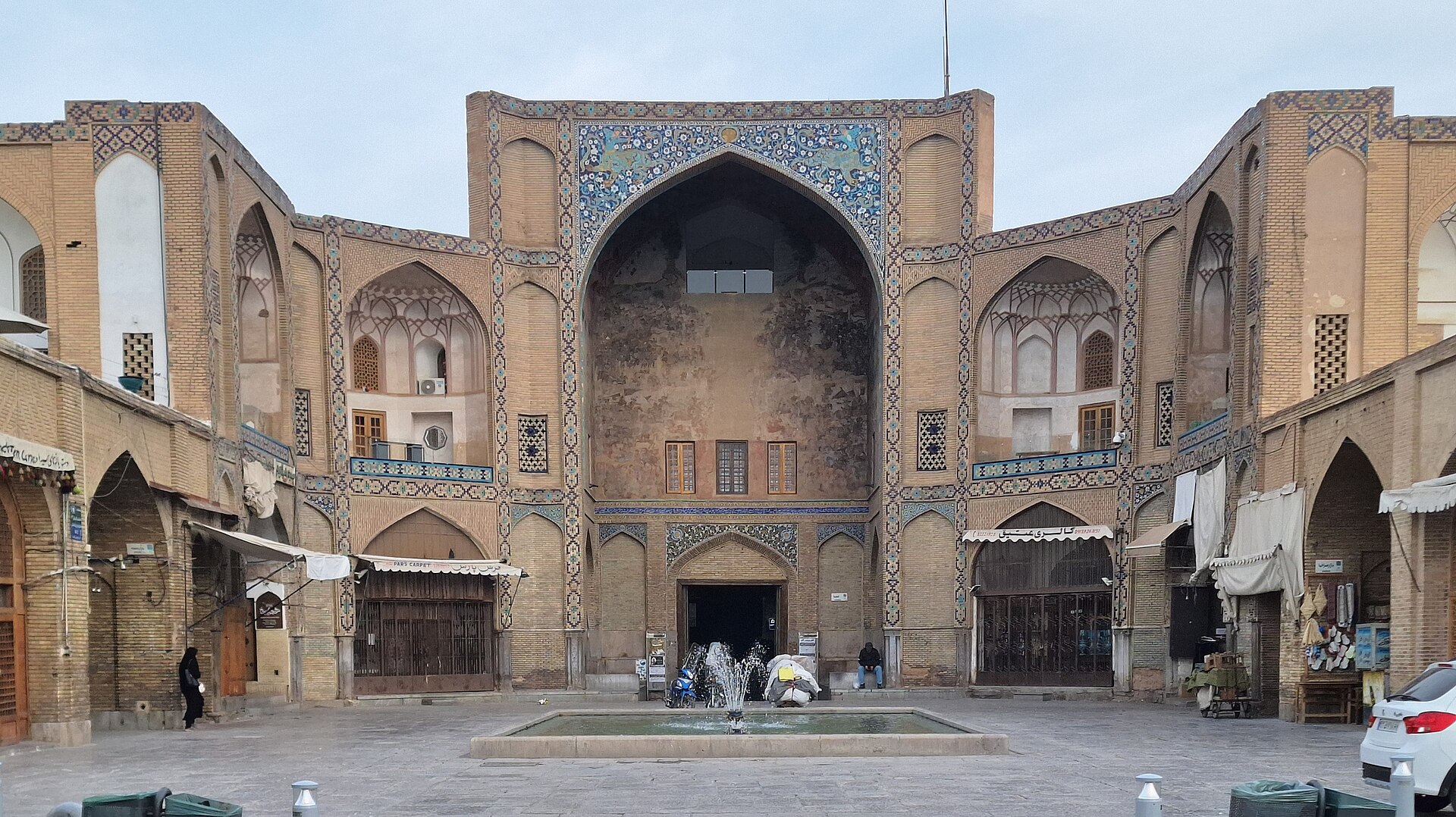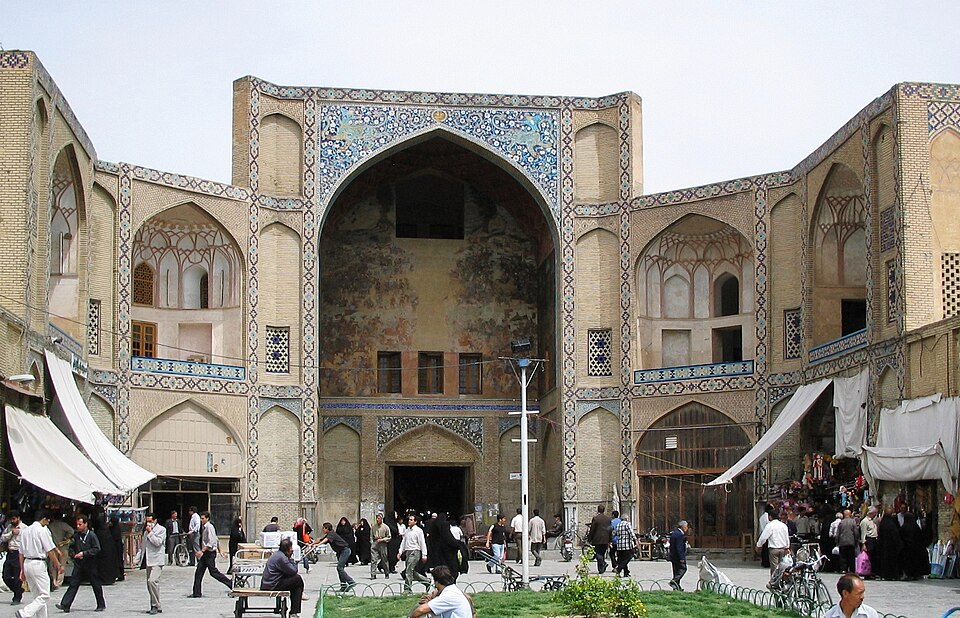
Behind the tiled Qeysarieh gate on the north side of Naqsh-e Jahan begins one of the oldest and longest bazaars in Iran. Its covered lanes wind for roughly two kilometres up to the Jameh Mosque, linking the Safavid square with the much older heart of the city; some sections go back to the Seljuk era nearly a thousand years ago.
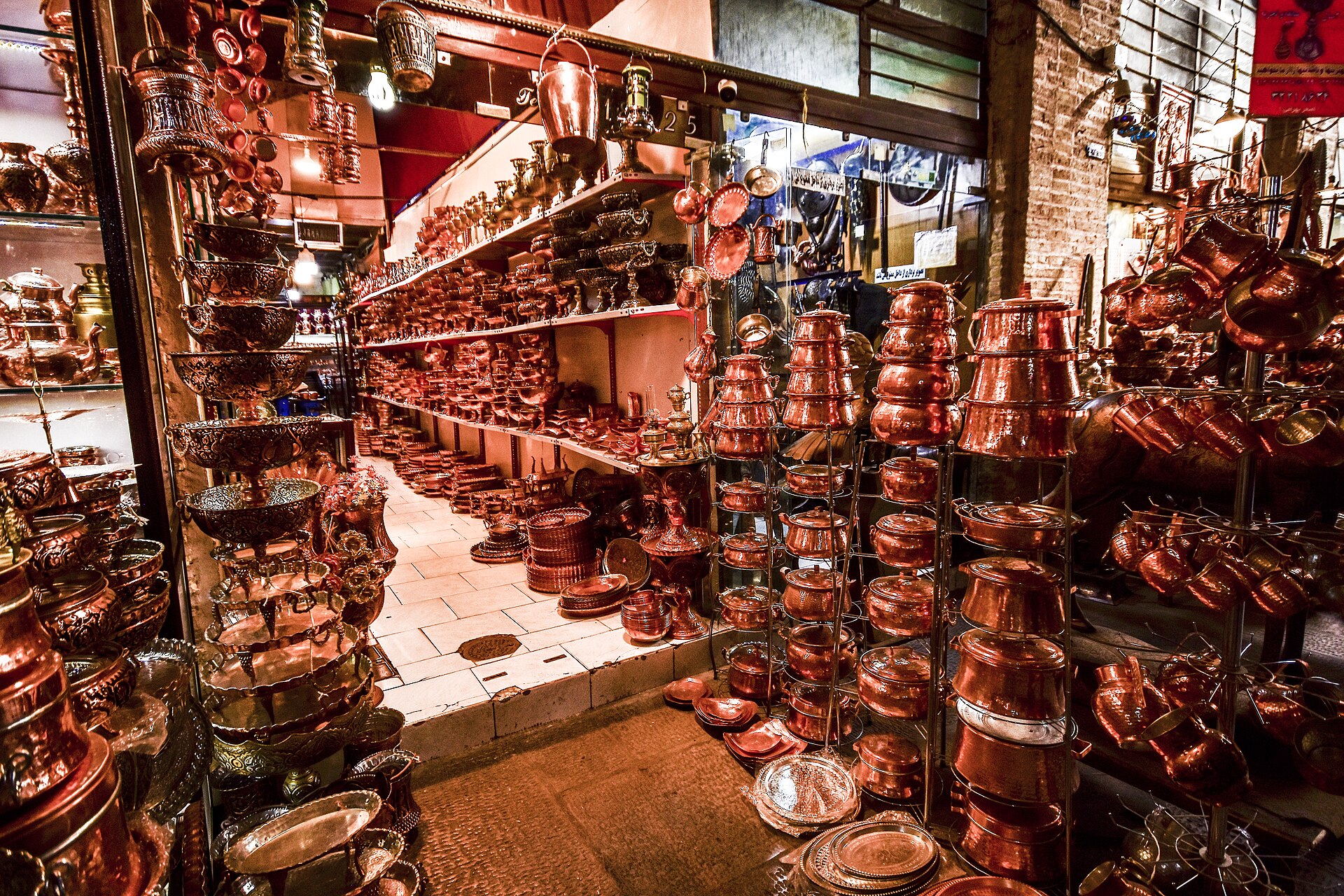
Look up at the Qeysarieh portal before you enter: its tilework shows hunting scenes and the archer of Sagittarius, the astrological sign of Isfahan’s founding. Inside, the bazaar is organised by trade — coppersmiths, carpet dealers, spice merchants, tailors — with caravanserais, mosques and bathhouses tucked behind its arches.
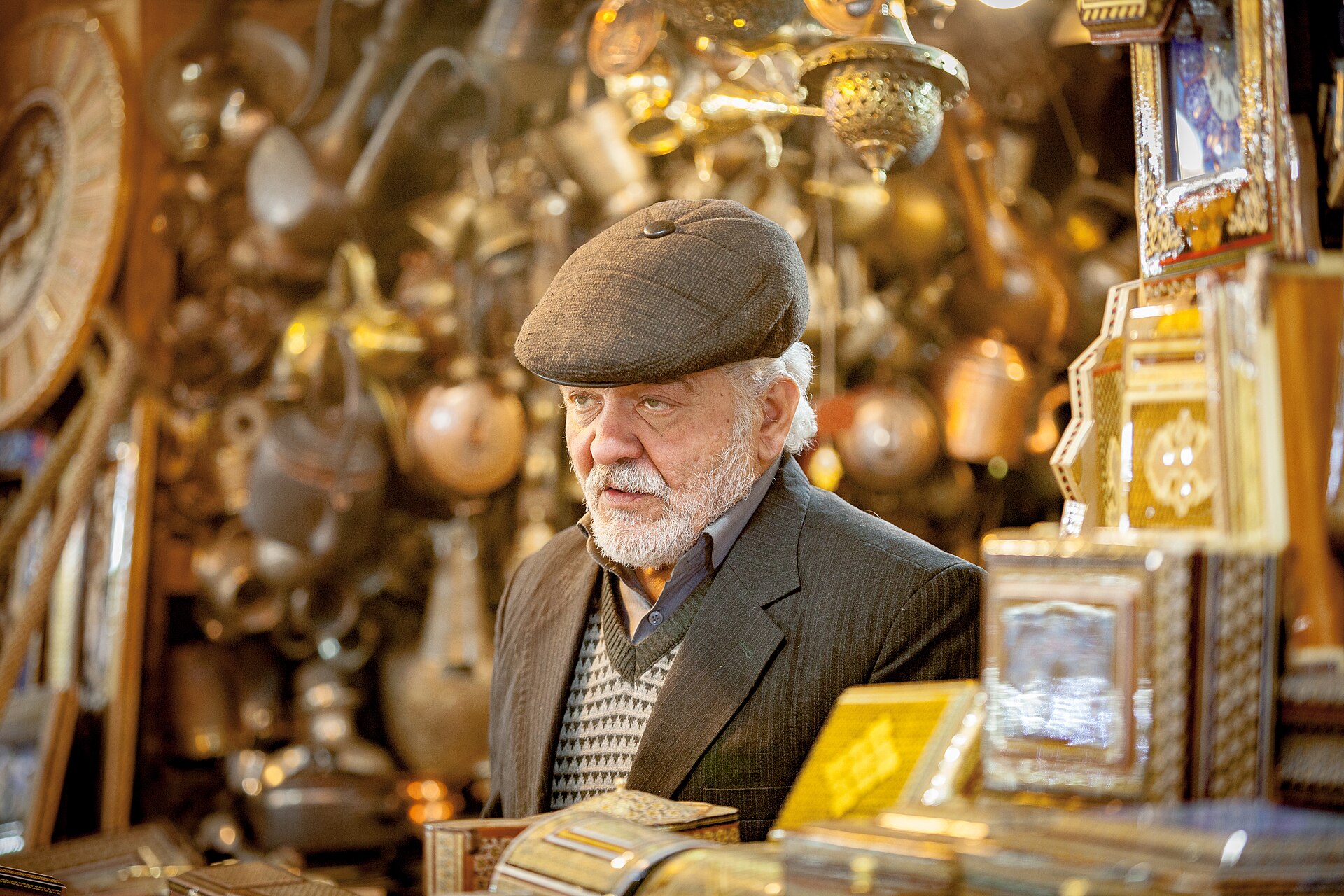
This is the best place to see Isfahan’s crafts being made: minakari (painted enamel on copper), khatam (micro-mosaic marquetry), qalamkar (hand block-printed cotton) and hammered copperware. Do not leave without trying gaz, Isfahan’s soft pistachio nougat, sold fresh by the box.
Highlights
- The Qeysarieh gate with its Sagittarius tilework
- Coppersmiths hammering in their lane
- Minakari, khatam and qalamkar workshops
- Fresh gaz (pistachio nougat) to take home
Gallery