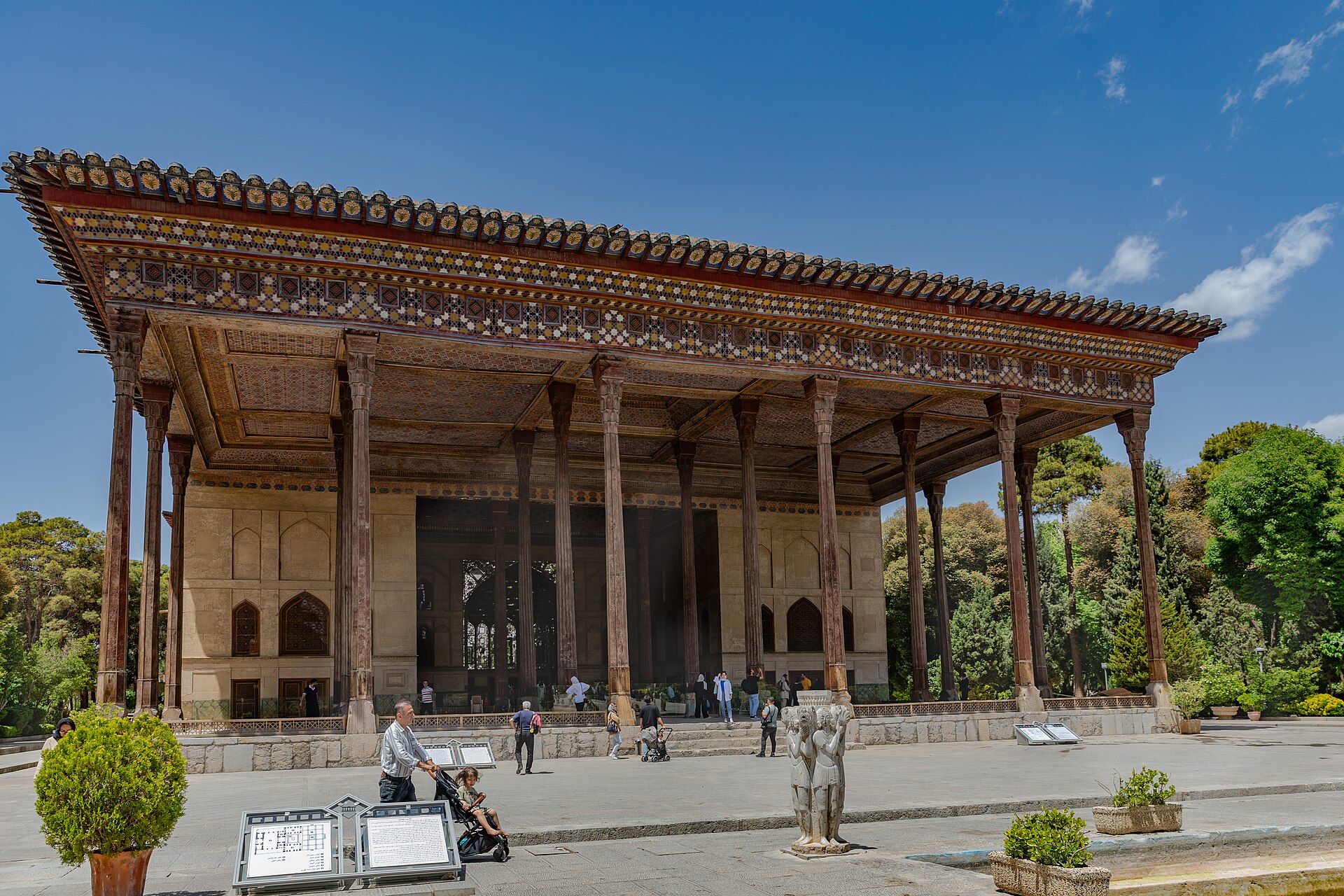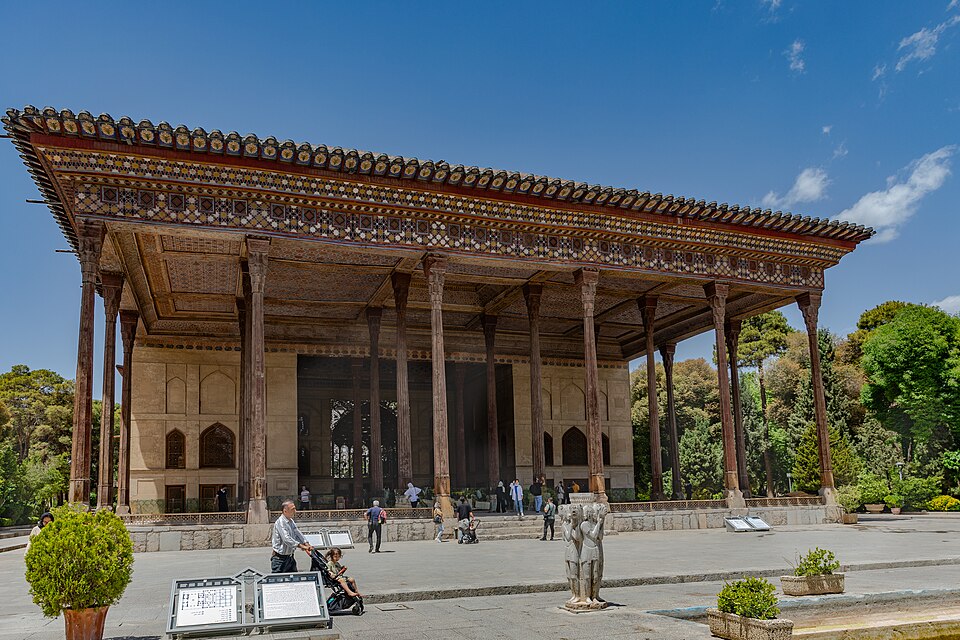
Shah Abbas II completed this pavilion in 1647 as a place to entertain guests and receive foreign envoys. Its name means “Forty Columns”, yet only twenty slender wooden pillars hold up the front porch: reflected in the long pool in front, they become forty — and in Persian, forty also simply means “many”.
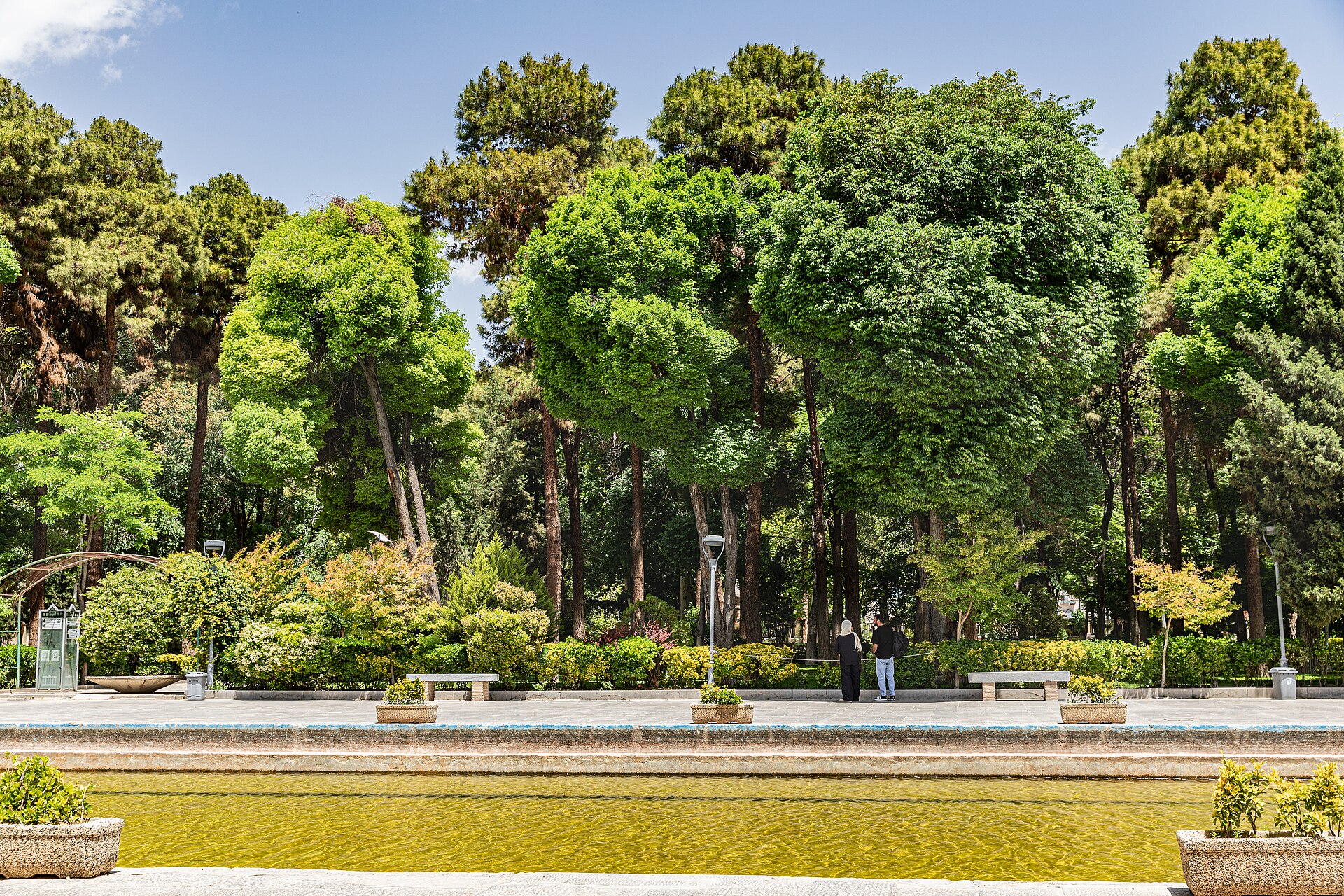
The palace stands in a walled garden of plane trees and fountains that, together with eight other historic gardens, forms the UNESCO World Heritage Site “The Persian Garden”. The porch ceiling glitters with wooden inlay, and the entrance hall once sparkled with mirror mosaic.
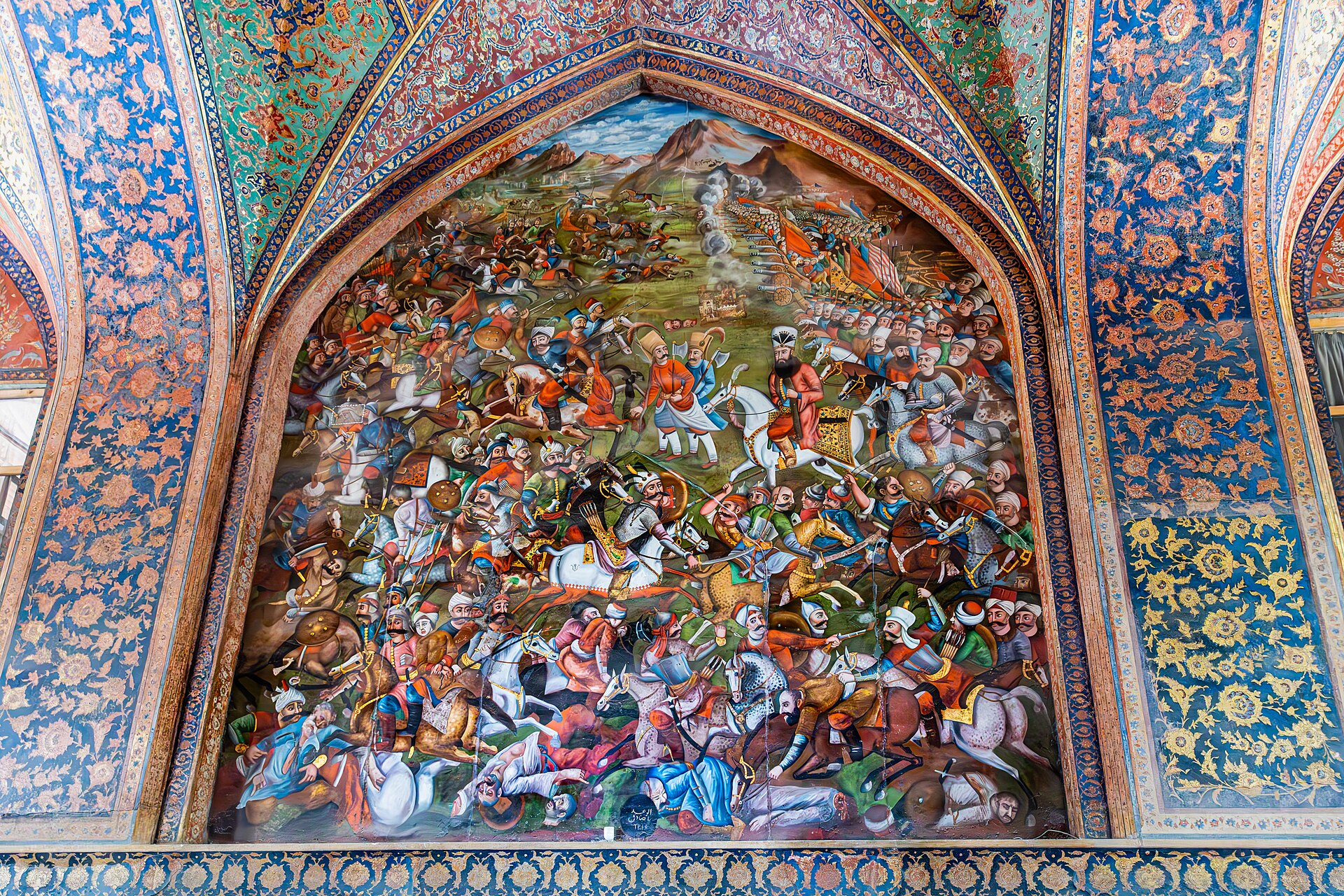
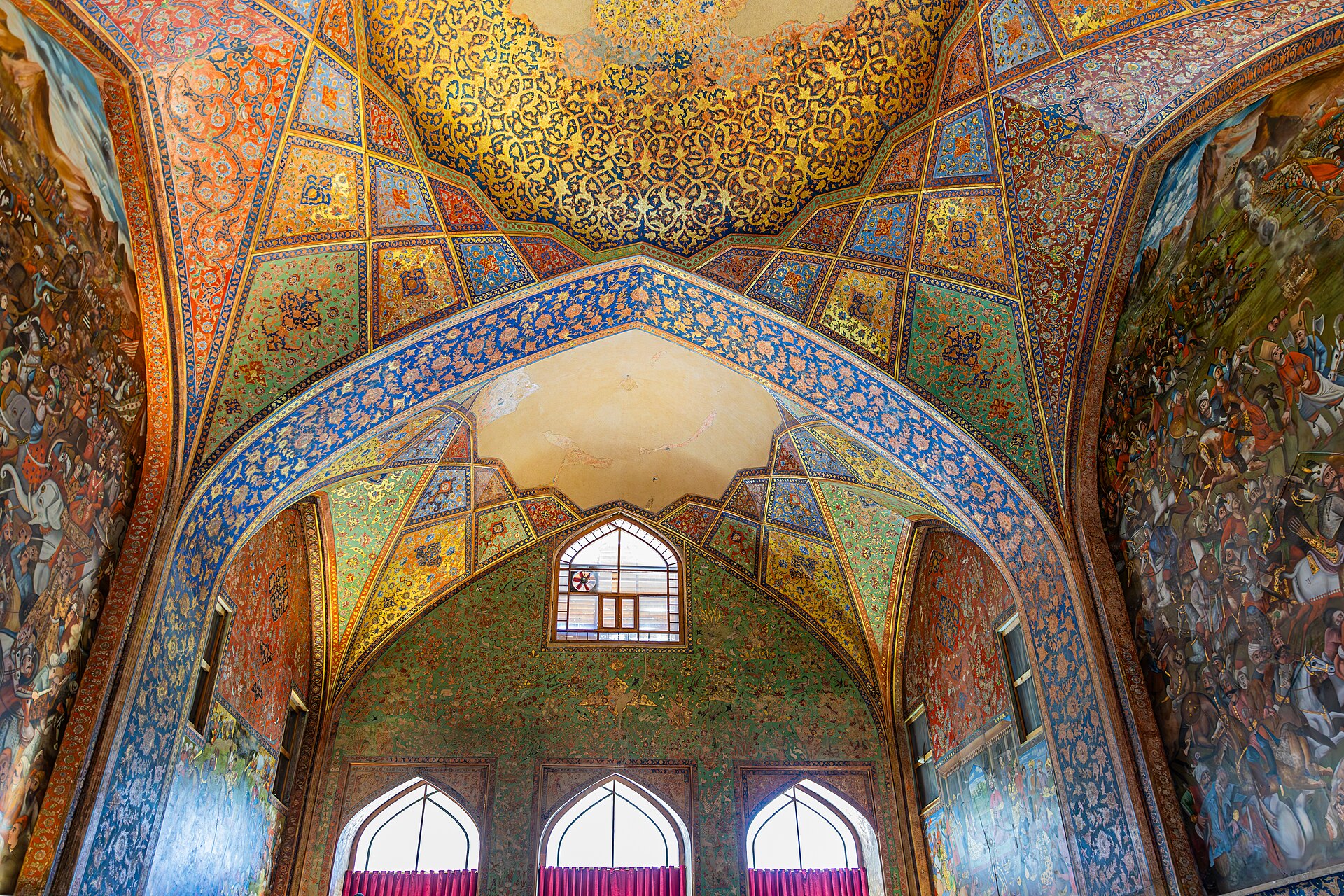
Inside, the great hall is lined with huge wall paintings: royal banquets with musicians and dancers, the reception of the Mughal emperor Humayun by Shah Tahmasp, and dramatic battle scenes such as Chaldiran. Smaller rooms show lovers, poets and European visitors in Safavid dress — a rare picture of court life four centuries ago.
Highlights
- The twenty columns reflected in the pool
- Monumental banquet and battle paintings
- Inlaid wooden ceiling of the porch
- Shady Persian garden with plane trees
Gallery